
Nature of Source
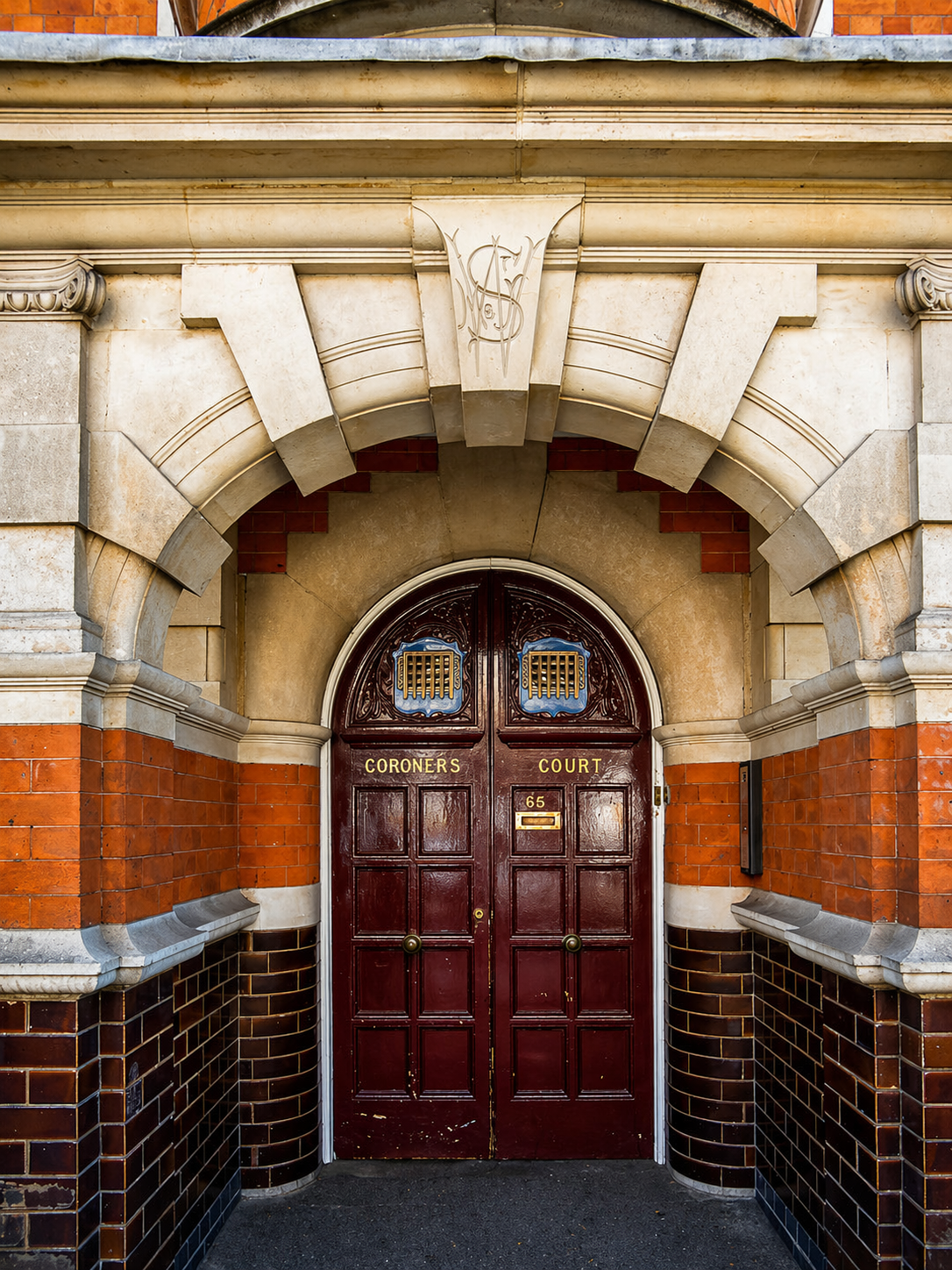
Coroner’s Court Westminster
What Are Coroner Inquests?
Coroner inquests are official investigations into deaths that occurred under unusual circumstances, including suicides, accidents, suspicious deaths or deaths in custody (such as in prisons). The purpose of an inquest is to establish how, when and where the death occurred, providing crucial details about sudden, accidental, suspicious or unnatural deaths. Inquests were also held for treasure trove finds. The jury originally consisted of between 12 and 24 people but was reduced to between 7 and 12 after 1926. Originally the coroner was a royal officer elected by freemen but after 1888, the county council appointed the official.
Typical contents of an Inquest:
- The inquest verdict on the cause of death.
- Coroner case files
- Details of the deceased and date and place of death
- Witness statements or depositions
- Coroner Jury findings
Accessing Coroner Inquest Records
- Pre-1752 Inquest Records
These records are held at The National Archives which were handed over by the coroner to the assizes judges who then lodged them with the King’s Bench files. Many of these inquests relate to prisoners, including debtors, who died in the King’s Bench and Millbank prisons debtors.
- Post-1752 Records
After 1752, coroners retained the inquest files themselves and those that have survived are found in County Record Offices. Be sure to check with the local Record Office for indexes extracted from coroner’s reports.
Availability of Records
Unfortunately, many post-1875 records were destroyed following the 1958 Public Records Act, although the event might still be covered by local or national newspapers. It’s worth checking historical newspapers as part of your research. Pre-1875 documents have been legally protected since 1921, but many had already been destroyed prior to these protections.
Unfortunately for research purposes, the 1921 ruling also advised that more recent records need only be kept for 15 years. Coroner inquest records are closed to the public for 75 years to protect the privacy of individuals, although next of kin may apply for access.
Summary of Research Tips
- Check death certificates for coroner’s name under ‘cause of death’ to confirm an inquest took place
- Search local and national newspapers for inquest coverage
- Contact local record offices for surviving records and indexes
- Be aware that many post-1875 records may have been destroyed
- Before 1733, verdicts were written in Latin
Coroner Inquests in Scotland
In Scotland, a different system exists for investigating unnatural deaths. Here, the Procurator Fiscal investigates sudden, accidental, suspicious, or in-custody deaths. The Procurator Fiscal determines whether the death resulted from natural causes. If not, they will decide if a criminal prosecution is warranted or whether to initiate a Fatal Accident Inquiry (FAI). FAIs have been in place since 1895 and are similar to coroner inquests in England and Wales.
If an FAI took place, this will be noted on the death certificate with reference to the Register of Corrected Entries where additional details of the case might be found. For more information on Scottish Fatal Accident Inquiries, consult the National Records of Scotland guide on Fatal Accident Inquiry Records.
Where Found
County Record Offices
Local archives hold a vast array of coroner inquest records and files including compiled name indexes from coroner’s reports in local newspapers as well as coroner reports, depositions or witness statements, coroner’s personal notes or summaries and case files. Please note that survival of records varies.
The London Archives
The archives holds coroner inquest records relating to deaths investigated within the boroughs of Greater London and the City of London. The collection spans several centuries, although availability varies depending on the coroner’s jurisdiction and the time period. Please note that survival of records is patchy up to 1926 and after only a sample remain.
Public Record Office of Northern Ireland (PRONI holds Coroner’s Inquest papers relating to over 25,000 people who died in Counties Antrim, Armagh, Down, Fermanagh, Londonderry and Tyrone between c.1872 and 1999. They also hold Coroners’ Registers which contain a summary entry for a corresponding inquest which may not survive. Search the eCatalogue for full descriptions of available coroner records.
Period Covered
1194 – Onwards
Genealogical Value
- Name, age, address, and date of death of subject.
- Family members and relationships.
- Names of jurors and witnesses.
- Name of coroner and verdict.
Further References
- Berkshire Coroners’ Notebook 1775-1813: Eureka Partnership
- Carmichael, Ian HB. Sudden Deaths and Fatal Accident Inquiries: Scots Law and Practice: W. Green, 1986
- Gibson, Jeremy & Rogers, Colin. Coroners’ Records in England and Wales. 3rd ed: The Family History Partnership, 2009
- Grundy, Joan. A Dictionary of Medical & Related Terms for the Family Historian: Swansong Publications, 2006
- Heritage, Celia. Tracing Your Ancestors through Death Records: A Guide for Family Historians: Pen and Sword Books, 2015
- Hunnisett, R. F. The Medieval Coroner: Cambridge University Press, 1961
- Hunnisett, R. F.Wiltshire Coroners’ Bills, 1752-1796: Wiltshire Record Society, 1981
- Hunnisett, R. F. Sussex Coroners’ Inquests, 1485-1558: Sussex Record Society, 1985
- Hunnisett, R. F. Sussex Coroners’ Inquests, 1558-1603: PRO Publications, 1996
- Hunnisett, R. F. Sussex Coroners’ Inquests, 1603-1688: Public Record Office, 1998
- Hunnisett, R. F. East Sussex Coroners’ Records, 1688-1838: Sussex Record Society, 2005
- Hunnisett, R. F. Calendar of Nottinghamshire Coroners’ Inquests, 1485-1558: Derry and Sons, 1969
- Hunnisett, R. F. Bedfordshire Coroners’ Rolls: Streatley, 1961
- Jeaffreson, John Cordy (ed). Middlesex County Records. 4 Vols: Greater London Council, 1972 (1886) (Volumes available to download and view at the Internet Archive or at British History Online)
- Raymond, Stuart. Death & Burial Records for Family Historians: Family History Partnership, 2011
Websites
The National Archives Research Guide
How to look for records of Coroners’ Inquests. This is a brief guide to help you with your research into coroners’ inquests. The majority of post mid-18th century records of inquests are held at local archives and not The National Archives. Records of deaths less than 75 years old may be retained by the coroner’s office.
Learn Genealogy
Coroner’s Records & Inquest Case Files, by Kimberly Powell.
GENUKI
Guide to Coroners’ Inquests and Reports.
The National Archives Blog
Coroners’ Inquest Records, by Mark Pearsall.
The National Archives Podcast
Coroners’ Inquests, by Dr Katy Chater. The podcast gives social and family historians a number of insights into the wealth of material to be gleaned from these records.
Online Databases
Ancestry
West Yorkshire, England, County Coroner Notebooks, 1852-1909. This collection includes more than 200 handwritten registers kept by Thomas Taylor, who served as the West Yorkshire county coroner between 1852 and 1900.
Ancestry
UK, Post Mortem Examinations and Case Books, 1840-1920. This collection is an index to post-mortem examination records and case books produced at St. George’s Hospital and Medical School in London, England, between 1840 and 1920.
Findmypast
London Lives, Culture & Society, 1680-1817. London Lives chronicles the lives of Londoners through the exploration of a variety of sources including criminal registers, apprentice records, coroner inquests, session papers, workhouse minutes, clerks’ papers and much more.
Findmypast
Suffolk, Coroners’ Inquest Records, 1767-1921. This index has been compiled by the Sussex Family History Society from the indexes from bundles of papers which are the records of the Coroners’ Inquests for the Liberty of St Etheldreda.
London Lives
Datasets include: City of London Coroners, Middlesex Coroners City of Westminster Coroners’ Inquests.
Hertfordshire Names Online
The site provides online access to the Hertfordshire Archives and Local Studies indexes including Coroner inquests listed by the deceased’s name. Searching the indexes is free but a charge is made for copies of a document. The indexes could also be of use for those with ancestors in the neighbouring counties of Bedfordshire, Cambridgeshire, Essex and Middlesex.
Bath Ancestors
Coroners Inquests, 1776-1835. Search Inquests carried out by the Bath City Coroner into sudden and unexpected deaths
CD Roms
N/A
