
Nature of Source
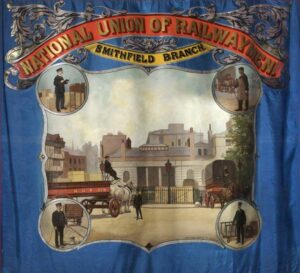
People’s History Museum
Introduction
From the mid-19th century, large sections of the working class joined the trade union movement, including significant numbers of women. The records offer a valuable but sometimes overlooked avenue of research, providing an insights into our ancestor’s working lives and political activities. This guide explains how to trace ancestors involved in trade unions, what types of records exist and where to find them.
The Rise of Trade Unions
The 1880s saw a significant increase in organised labour and trade union membership, particularly among the unskilled working classes. A significant number of women joined trade unions, epitomised by the Bryant and May matchgirls’ strike at the Bow, East London factory in 1888. Led by the social reformer Annie Besant, approximately 1,400 women and girls walked out in protest against poor working conditions and low wages. Their action inspired wider participation in union activity among women workers.
The Combination Acts of 1799 and 1800 effectively banned organised labour movements and the notion of collective bargaining for better wages or working conditions. The Acts were introduced following the French Revolution and amid a perceived threat of organised labour. Records from this date rarely exist. Despite the ban, labour unrest grew which culminated in the Combination Acts Repeal Act of 1824. The new Act legalised union activity making it legal for labour unions to collectively agitate for improved wages and working conditions. In 1925 the Combinations of Workmen Act 1825 was passed which imposed a number of restrictions on unions and limited their activity to mainly negotiating wages and working hours.
Development of Unions
An early attempt to establish a national confederation of trade unions in Britain came in 1834. That year, the social reformer Robert Owen founded the Grand National Consolidated Trades Union, which aimed to cover workers across all trades. The new national confederation of trade unions faced determined opposition from both employers and the government. This was highlighted by the case of the Tolpuddle Martyrs, in which six Dorset agricultural workers were transported to Australia in the 1830s for attempting to form a union and affiliate with the GNCTU. Although the union folded within a very short time, individual trade unions flourished especially with the emergence and rapid expansion of the industrial sector.
Identify the Trade or Industry
The starting point of research is to establish which industrial sector industry your ancestor worked in and then narrow down the possible trade unions. Was your ancestor a miner, railway worker, iron and steel worker, builder, stone mason, textile worker, shop assistant, domestic workers or part of another trade? Look for answers in census records (listing occupations), marriage certificates, birth certificates (father’s occupation) and death certificates.
Identify the Relevant Union
Some 5,000 individual unions have existed since the 19th century and many smaller unions amalgamated into larger ones or folded. The following resources will help identify the correct union:
- The Union Family Trees shows how unions merged and evolved over time in the form of a ‘family tree’.
- The A to Z of trade unions provides a listing of trade unions by trade and date.
- The multi-volume Historical Directory of Trade Unions is a comprehensive directory of trade unions which helps trace a union’s history and affiliations.
Types of Records
Once you’ve identified the union, look for the following types of records:
- Admission books showing when members joined the union.
- Membership cards providing the individual documentation.
- Membership lists (rare but valuable) record all members at a given time.
- Minute books and branch records, which often mention individuals in connection with union decisions.
- Branch returns and annual reports, sometimes list members and officers.
- Union journals and union histories, may include names, especially for those in leadership or involved in strikes and disputes.
- Union Histories: Books chronicling the union’s history and development.
- Newspaper reports of strikes, industrial disputes or union meetings might mention your ancestor.
Explore Related Movements
Members of a trade union may have been active in other political movements and parties. Consider searching records for:
- The Labour Party, Liberal Party or Communist Party.
- Independent Labour Party.
- The Chartist movement (especially in the 1830s-1840s).
- The Co-operative movement, which often involved union activists.
Additional Resources
The following GenGuide sources could assist in researching trade union ancestors:
Where Found
County Record Offices
Local archives may include records from local branches of national unions, regional trade councils and employers’ associations. The types of records commonly held include union membership registers, admission books, quarterly and annual reports, branch records and obituaries.
- Series LAB 2, Ministry of Labour and Predecessors: Correspondence, 1886-1955. The series covers a wide range of labour and employment subjects including industrial relations, labour disputes, working hours, health and safety, women’s equality rights. The enhanced catalogue descriptions for LAB 2 are available via the TNA Discovery First click on ‘Advanced search’ and then type in the name, place or subject being searched and then filter by the LAB 2 reference.
- Series FS 25, Registry of Friendly Societies: Trade Union Record Files: Indexes and Certificates of Registration. This series contains indexes and numerically arranged certificates of registration of trade unions.
- Series NF, Records of the Registry of Trade Unions and Employers Association, 1970-1975.
Modern Records Centre
The Modern Records Centre at the University of Warwick holds significant historical records related to British trade unions and associated organisations such as trade unions, friendly societies, employers’ associations and a variety of political organisations and pressure groups. Amongst other trade union records, the centre is the official home to the archives of the Trades Union Congress and the Transport and General Workers Union. The library houses a collection of trade union journals some digitised. Many prominent trade unionists have deposited their personal papers at the centre.
Free Indexes on the MRC Website include:
- Members of the United Society of Boilermakers and Iron and Steel Shipbuilders who died in WWI.
- Deceased members of the Operative Society of Masons, Quarrymen and Allied Trades (1836-1921).
- Individuals mentioned in ‘The Seaman’ journal for meritorious service or death (1914-1918).
Labour History Archive & Study Centre
The centre, housed at the People’s History Museum, is a nationally and internationally significant collection documenting over 250 years of British social and political history. The holdings include the archives of the Labour Party and the Communist Party of Great Britain, trade unions, Co-operative Society and other left wing political groups and movements. The archives also hold a range of material to add social background such as photos, books, newsletters and pamphlets.
Trades Union Congress Library Collections
The TUC Library is the major research library for the study of all aspects of trade unions, collective bargaining and labour history, with both historical and contemporary coverage. The emphasis is on Britain, but many other countries are represented, especially Europe and the Commonwealth. The core areas of the collection are the publications of the TUC since its foundation in 1868. Other deposited collections include records of the Workers’ Educational Association and the Labour Research Department. Most of the TUC Library acquired since it moved to London Metropolitan University in 1996 is on the University’s online catalogue.
Working Class Movement Library
The WCML is a unique collection and resource based in Salford, UK, dedicated to preserving and sharing the history of working people’s struggles and achievements. It offers access to books, archives, and exhibitions focused on labour, social justice and the working class movement.
Bishopsgate Institute Library
Bishopsgate Institute Special Collections and Archives document the experiences of everyday people, and the extraordinary individuals and organisations who have strived for social, political and cultural change. The collections include trade union books and pamphlets and personal papers with sections on working conditions, trade unions and labour relations and Labour biographies. The library holds archives and records of labour movements and political parties including the Co-operative Society and the Labour Party and affiliated organisations. Specialist collections include the archives of the General Federation of Trade Unions and the National Miners’ Support Network.
LSE Library
London School of Economics and Political Science. Labour, employment and working lives. The main scope of the collection focusses on the development of work, labour movements, industrial relations in Britain from the 19th century onwards. The collection also covers international perspectives and includes a wide range of materials such as personal papers, pamphlets, trade union journals and oral histories. The collection houses the Sidney and Beatrice Webb Collection and personal papers of trade unionists.
People’s History Museum
The Labour History Archive & Study Centre. The Centre is the UK’s main specialist repository for research into the political wing of the labour movement. Its collections include the complete official records of the national Labour Party and the Communist Party of Great Britain as well as materials from groups such as the Chartists, trade unions and left-wing pressure groups. The press archive includes left-wing newspapers and publishing houses. Other material includes trade union and political banners, badges, posters, placards and photographs, cartoons and prints.
Individual Trade Unions
The Certification Officer list of all current and former officially recognised trade unions with relevant details about each union such as names, status, and other registration information.
Period Covered
1788 – Onwards
Genealogical Value
- Name of the member.
- Birth year or age at admission.
- Date joined the union
- Marital status (sometimes noted as married or single at registration).
- Name of spouse (occasionally recorded, especially if benefits were claimed for family members).
- Address or location (sometimes included in membership registers or returns).
- Occupation or trade and number of years in the trade.
- Union name and branch.
Further References
- Anderson, Janice. Working Life in Britain: Futura Publications, 2007
- Crail, Mark. Tracing Your Labour Movement Ancestors: A Guide for Family Historians: Pen & Sword, 2009
- Fowler, Simon. Sources for Labour History: PRO Publications, 1995
- Marsh, Arthur & Smethurst, John (eds). Historical Directory of Trade Unions: Ashgate Publishing, 2006 (Preview available from Google Books)
- Reid, Alastair, United We Stand: A History of Britain’s Trade Unions: Penguin, 2005
Websites
TUC History Online
The site offers a digital resource dedicated to the history of trade unions in Britain. The site provides access to a wealth of images, documents and resources that chronicle the decisive role trade unions have played in shaping Britain’s economic and social landscape. Resources include the General Strike, story of the Match Girls strike and TUC Congress Reports between 1868 and 1968.
Trade Union Ancestors
The site is designed to help people trace their family history through the British trade union movement. Key Features include an A to Z Index of Trade Unions, Trade Union Family Trees to see how unions have merged, split, or evolved over time, Trade Union Histories: and a step-by-step guide to help you identify which union your ancestor may have belonged to and how to find relevant records.
Modern Records Centre
Research Guide: Are you looking for an ancestor? Information on sources for genealogy at the Modern Records Centre, arranged by occupation.
Modern Records Centre
Research Guide: Occupations. Listing of occupations with associated trade unions.
The National Archives Exhibitions
The Struggle for Democracy. Early trade unionism.
Railway Museum
Researching a family connection to the railways? Discover a range of resources and information to help you on your search. Follow the tips and suggestions in the steps below to delve deeper into your ancestors’ railway stories and find out what their working life was like.
Robert Owen Museum
The museum celebrates the life and legacy of Robert Owen (1771-1858), a pioneering social reformer, founder of the co-operative movement and advocate for free education and improved working conditions.
Tolpuddle Martyrs Museum
The Museum tells the story of the Tolpuddle Martyrs, six farm workers from Tolpuddle, Dorset, whose arrest, trial and punishment in the 1830s led to the birth of modern trade unionism in Britain.
Society for the Study of Labour History
The Society is the UK’s principal organisation dedicated to the study and promotion of labour history. Its mission is to encourage interest in the history and heritage of the labour movement both among professionals and amateurs. The society also Actively promotes the preservation of historical resources and archives related to the labour movement.
Chartist Ancestors
The site is dedicated to the history of Chartism. Sections include a Chartism FAQs, a Chartism Timeline and a Chartist Ancestors Blog. The site hosts the Chartist Ancestors Databank which lists about 14,000 individuals involved in the Chartist cause.
Swing Riots & Rioters
The site is run by Jill Chambers a renowned specialist researcher into the swing riots and transported convicts and includes information on the swing riots of 1830-1831 as well as lists of convicted machine breakers and those held in prison hulks.
The National Archives
Education: What caused the ‘Swing Riots’ in the 1830s? Political and social reform in 19th century Britain.
Online Databases
Findmypast
Trade Union Membership Registers. Digitised images of original records books from 26 different trade unions from the Modern Records Centre, University of Warwick. Search for an individual in the records including admission books, annual reports and membership lists and include details about individual members such as payments made, benefits received and the names of spouses.
Findmypast
Explore this immense collection of over three million British trade union records from the Modern Records Centre, University of Warwick. Search through 257 volumes of trade union records. Use our full list of archive references and descriptions below to help you search the records. Discover your ancestor in the thousands of admission books, annual reports and membership lists. Many trade unions included international branches from Ireland to Australia to Spain and Belgium.
Findmypast
Match Workers Strike, Bow 1888. Was your ancestor involved in the London-based Match Worker’s Strike of 1888? The event caused much publicity at the time, snowballing from the dismissal of a worker to what is now considered a milestone in the history of British trade unionism as 714 women and teenage girls fought for their colleague, fair pay and safe working conditions.
Findmypast
British Rolls Of Honour and Nominal Rolls, First World War. Trade Union Members, Service & Casualties 1914-1918. Details of men and women from 18 different unions who served as soldiers or nurses in the First World War. The documents include details about individual members such as payments made, benefits received, name of spouse and can include members who did not serve in the war.
British Newspaper Archive
Trade Unionist, 1892. Published during the height of the New Unionism movement in the early 1890s, which sought to extend union membership to semi-skilled and unskilled workers, and to support industrial action, the Trade Unionist provides a fascinating insight into trade union activity during the late nineteenth century.
Chartist Ancestors
The site is dedicated to the history of Chartism. Sections include a Chartism FAQs, a Chartism Timeline and a Chartist Ancestors Blog. The site hosts the Chartist Ancestors Databank which lists about 14,000 individuals involved in the Chartist cause.
CD Roms
GenFair
Swing Riots & Rioters. Publications about machine breakers, rioters, protesters involved in the 1830 Swing Riots.. Publications include day by day account of the riots and trials in each county. It includes biographical details of all those tried for machine breaking and associated crimes.
